
It was when I decided to merge the Saturday and Sunday classes, that I really found the love for teaching everyone together. I’d been enjoying offering alternatives in class for a while.. saying things like ‘if you want to feel more of a stretch do this, and less – do this..’ and now my group classes are all ‘open level’.
I don’t know about you, but I think finding a yoga class at a time and place that suits is surprisingly tricky. So I think if it’s at a time that works, everyone should be included.
The essence of yoga in itself is about coming together, union. About recognising ourselves as part of the whole universe and bowing to the whole universe that resides within us. Having a class that is outside of someone’s comfort zone, so it leaves them feeling lost, unsupported or inadequate just doesn’t fit with that essence I don’t think.
And I think it’s very possible to feel that way in yoga. I felt it last week, when I went to a ‘slow flow’ and was given a one-legged squat balance to do, without an alternative. We rushed through the pose and I could hear huffs from fellow students as if to say ‘huh?! help!’
Yoga is hard! Downward dog is hard, warriors burn, sitting still and quiet can be tough and balancing is really bloody difficult some days! And with practice, we grow and it feels amazing to see the body learn and adapt. But I don’t think it’s said enough. And I think there’s a lot of space for yoga that teaches us to go mindfully in to a pose that is right for us. And to learn the alternatives, so we can decide if we want to go further or more gently.
In my life as a Speech and Language Therapist, my role was talking to teachers about differentiation. How they could teach a lesson and make it enjoyable and useful for a whole range of children. We’d call it stepping it up and stepping it down.
And I try to do the same in yoga: by presenting the options and letting students choose. Saying, ‘you can do this, or maybe this feels better for you.’ Not saying ‘the full pose is..’ or ‘ you should look like this’. There’s a real trust that students will listen to their body and find what feels good in that moment.
I’m building some examples of options, like offering downward dog or table top (hands and knees); and offering time to stay in poses for as longer or not (e.g. back bends). When we are in a lunge the back knee can be down or lifted (makes a big difference). We can use blocks, cushions, stools and chairs when sitting cross legged. We can hold balances for as long as we like.
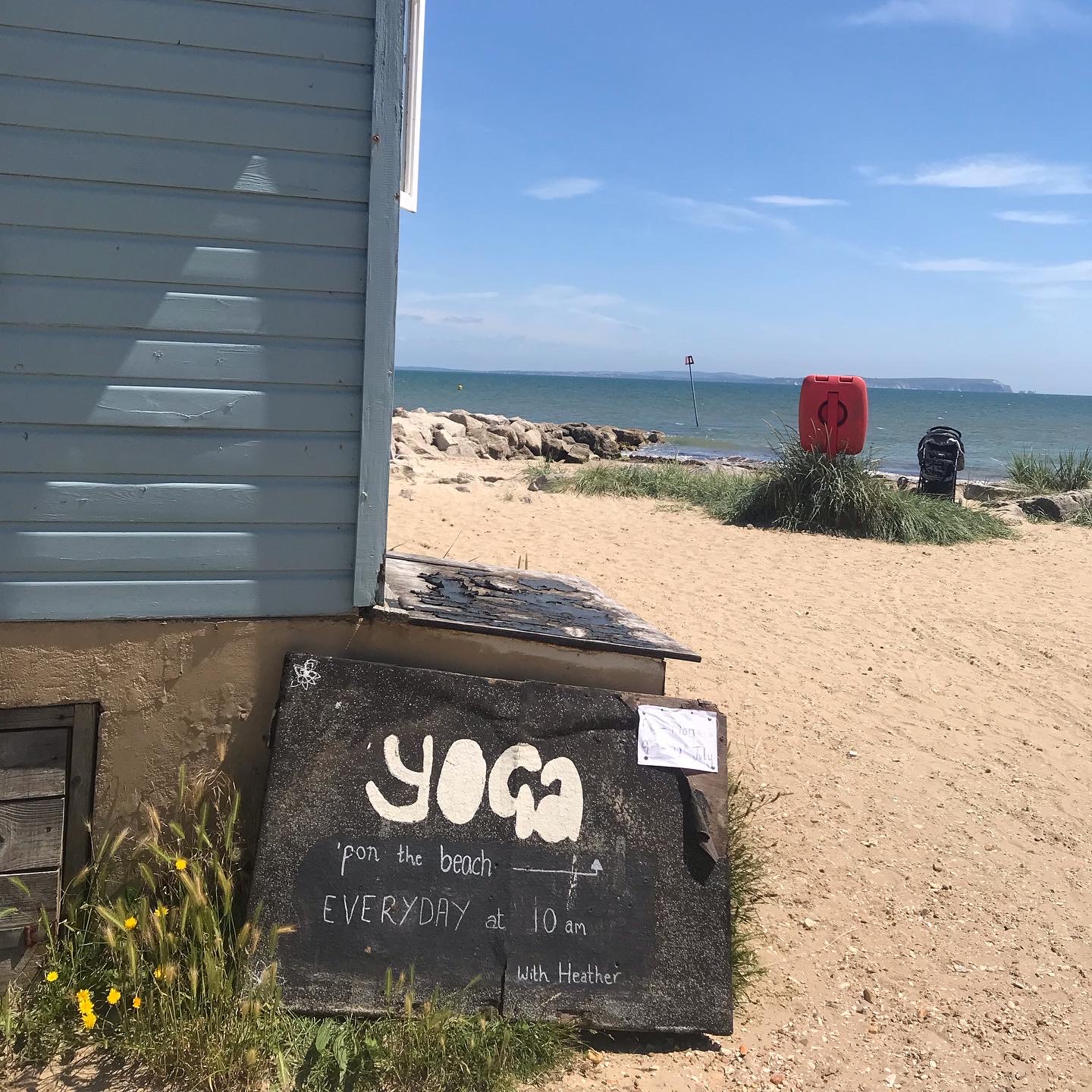
I think perhaps being on Zoom helps with everyone doing their own thing. The sense of comparison isn’t there as much. And at my classes at the beach this week, there was some variation but I think students did follow each other more (but I think it would come with time).
And the magic? Seeing students make choices that I can see feel good. Things we’ve talked about before, and they’ve remembered. And even more exciting, when they do something I hadn’t thought of. That’s really really great. Seeing a whole range of different shapes and positions in a group class makes me really feel like I’m doing my job.
 We've moved